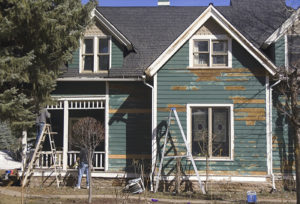
 An old house can be anywhere from 20 years old to more than 100 years old. And America has lots of them. According to a survey conducted by HUD, the average age of American homes is around 37 years old. So your chances of finding and buying an older home are quite high. Fortunately, there are renovation loan options that help home buyers make an old home more livable and plenty of experts and home renovators that offer insights on how to go about it. Here are some recommendations you can follow when you tackle your house project.
Start with the practical things.
Renovating the inside of your home will do no good if the roof suddenly springs a leak or the foundation falls in or the faulty wiring is threatening to cause a dangerous situation. As one home renovator stated, “We first address the things that will make the house fall down.”
Make sure that all the foundational parts of your house are brought up to a safe, livable condition. That includes the roof, foundation, insulation, windows, siding (or other exterior application), plumbing, electrical system, and HVAC system. While these things aren’t the most exciting part of renovating your old home, they will definitely cause problems if they are not in good condition.
Implement any additions or structural changes.
Once you’ve addressed the problem areas, you can start adding to or changing the layout of your home. Perhaps the kitchen is a bit cramped, or you’d like to create a laundry room or add a two-car garage. Whatever the goal, it’s a good idea to enlist an architect to help you draw plans. You’ll want to maintain the general aesthetic and proportions of the existing home, and that is more difficult than it seems.
For an addition, the roofline and exterior materials should match the existing structure. The new structure should also not overpower the existing house. Think of size, proportion, and materials when attempting an addition. And when you’re trying to make change to the interior layout, you’ll almost certainly run into structural limits, for instance, a load-bearing wall that can’t be moved. Both situations require strategic solutions that don’t compromise the quality of your home. As Norm Abram from This Old House states, “No matter what style your house is, the trick for any addition is to make it appear as if it were always there.”
Proceed to the key rooms of the house.
After you’ve addressed all the structural changes, you’re ready to start on changes to specific rooms. The kitchen still leads as the most renovated room in the house. Older homes tended to put less value on kitchens, instead making them into cramped afterthoughts. Sometimes, you can create space by removing an unnecessary island or jutting nook from an old kitchen. Other times, you can simply replace the cabinetry and wall treatments to create a better space.
Bathrooms are another common item on renovation lists. Older homes almost never had master baths, an almost-necessity for today’s homes. Fortunately, bathrooms can fit into incredibly small spaces, whether by merely deducting a few feet from an existing room or by fitting it under a staircase or by turning a walk-in closet into a bathroom. Remodel experts say that almost every house has space somewhere for an extra bathroom.
After kitchens and bathrooms, you’ll want to proceed to other areas of the house, such as the living room or the bedrooms. Many older homes have bedrooms with limited closet space or no closets whatsoever. Closets can also be created in almost any house.
Create a beautiful outdoor landscape.
After redoing the interior of your home and making it comfortable and pleasing to the eye (especially to your eye), you’ll have some energy to dedicate to the look of your lawn and garden. One of the appeals of older homes is that they are likely to have full-grown trees and bushes. There’s no need to completely replace the existing landscaping. Instead, approach it with the intent to use its existing features in your new layout so that you can maintain the character and beauty of your older home.
Perhaps the rose hedge could be trimmed back or started in a different spot, or the area around the snowball bush could be restructured to create a less scattered appearance, or perhaps the lawn just needs to be reseeded. You could even add features, such as waterfalls and stone fireplaces. If you run into something that’s too complicated, contract with a landscape designer to help you create the look you want.
Renovating an old house and turning it into a home is a rewarding venture. When it’s done right, you’ll have a place be proud of, as well as a place to call home.
What’s stopping you from getting a renovation loan?