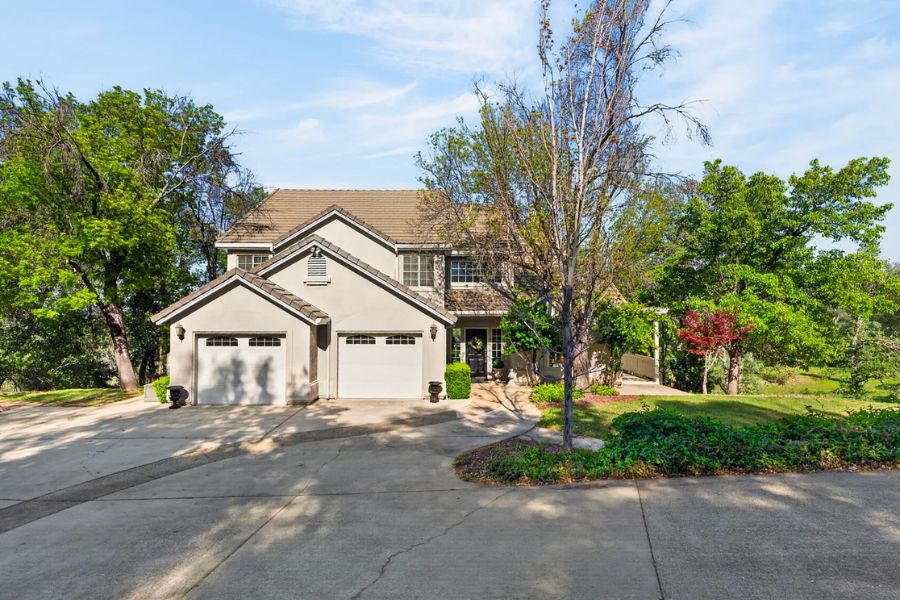
Redding has become home to a growing number of families where one spouse is a U.S. citizen and the other is a permanent resident or holds a work visa. Physicians at Mercy Medical Center and Shasta Regional, engineers working remotely for tech companies, healthcare professionals across the region, and skilled tradespeople have all relocated to Shasta County with international backgrounds that shape their financial lives in specific ways. The mortgage process for these mixed-status families involves rules that catch many buyers off guard, particularly around how non-citizen borrowers are evaluated, which visa types are acceptable to different lenders, and whether citizenship status affects loan pricing or terms. Understanding these rules before applying can prevent surprising denials, avoid unnecessary down payment requirements, and identify which loan programs work best for your specific situation.
The Key Distinction Between Permanent Resident Aliens and Non-Permanent Resident Aliens
The single most important concept in non-citizen mortgage qualification is understanding which category of immigration status applies to your situation. Mortgage lenders generally divide non-citizen borrowers into two main categories with different rules and treatment, and confusing these categories leads to many of the misunderstandings that frustrate mixed-status families.
Permanent resident aliens, commonly called green card holders, have been granted authorization to live and work in the United States on a permanent basis. They hold a Permanent Resident Card issued by U.S. Citizenship and Immigration Services. From a mortgage qualification perspective, permanent resident aliens are treated essentially the same as U.S. citizens for nearly every loan program. The Fannie Mae Selling Guide on non-U.S. citizen borrower eligibility confirms that mortgages to permanent residents are available under the same terms as those for U.S. citizens.
Non-permanent resident aliens are foreign nationals living in the United States for a specific purpose, typically employment under a work visa. This category includes holders of H-1B specialty occupation visas, L-1 intracompany transfer visas, TN visas under USMCA for Canadian and Mexican professionals, E-1 and E-2 treaty trader and investor visas, O-1 extraordinary ability visas, and similar categories. Non-permanent residents are also eligible for mortgages under most loan programs, but lenders apply additional scrutiny to verify continued legal status and income stability. A knowledgeable Redding mortgage lender can quickly determine which category applies to your spouse’s situation and identify the documentation requirements that follow.
How Conventional Loans Treat Non-Citizen Borrowers in 2026
Conventional mortgages backed by Fannie Mae and Freddie Mac offer the most flexible terms for non-citizen borrowers and are typically the best path for mixed-status families. The official guidance is clear: Fannie Mae purchases and securitizes mortgages made to non-citizens who are lawful permanent or non-permanent residents under the same terms available to U.S. citizens. This means same interest rates, same down payment requirements, same loan limits, and same qualifying standards.
The practical reality involves additional documentation rather than different terms. For conventional loans, non-citizen borrowers must demonstrate:
- A valid Social Security Number for each borrower on the loan
- Current verified legal status in the United States through appropriate documentation
- Documentation that work authorization will continue sufficient to support the income being used
- All standard underwriting requirements that apply to citizen borrowers, including credit, income, and assets
The documentation requirements depend on the borrower’s specific immigration status. Permanent resident aliens typically provide a copy of their unexpired Permanent Resident Card. Non-permanent residents provide their work visa, I-797 Notice of Action showing visa approval or renewal, Employment Authorization Document if applicable, and passport information. The combination of these documents satisfies the lender’s legal obligation to verify lawful presence before delivering the loan to Fannie Mae or Freddie Mac.
The key thing to understand is that Fannie Mae and Freddie Mac do not specify exact documentation requirements. Instead, they allow lenders to make reasonable determinations based on the documents available, and lenders themselves bear the legal responsibility for the determination. This creates situations where one lender may be comfortable with documentation that another lender views as insufficient. Choosing a lender experienced with non-citizen borrowers genuinely matters because their familiarity with the documentation translates directly into smoother underwriting.
Why Visa Expiration Dates Create Underwriting Sensitivity
One of the most common complications for non-permanent resident borrowers involves visa or work authorization expiration dates that fall close to the loan application or closing. Lenders evaluate income stability based on the borrower’s ability to continue earning, which depends on their continued ability to legally work in the United States. When work authorization expires within a year of closing, lenders typically apply additional scrutiny.
The specific concerns lenders address include:
- Whether the visa or work authorization has at least one year remaining before expiration
- Whether the borrower has filed for renewal or extension
- The historical pattern of renewals for similar visa categories
- The employer’s commitment to sponsoring continued visa status
- The borrower’s overall career trajectory that supports continued employment
- Documentation of any pending green card application that could replace temporary status
For H-1B visa holders specifically, the U.S. Citizenship and Immigration Services H-1B program page provides information about the program structure and renewal patterns. H-1B visas are initially granted for up to three years and can be extended for an additional three years, with longer extensions available for those pursuing permanent residency. Lenders familiar with H-1B patterns generally view these visas favorably because the renewal process is well-established and the underlying employment is typically stable.
For families where the non-citizen spouse’s work authorization is approaching expiration, planning the mortgage timing around renewal status can be valuable. Closing shortly after a successful renewal provides documentation that satisfies most lender concerns. Closing during a pending renewal can work but typically requires additional documentation about the renewal process and the employer’s commitment to sponsorship.
How FHA Loans Handle Non-Citizen Borrowers
FHA loans offer another path to homeownership for non-citizen borrowers, with rules that mirror conventional treatment in many respects. The HUD Single Family Housing Handbook 4000.1 outlines FHA’s requirements for non-citizen borrowers.
FHA loans are available to permanent resident aliens and non-permanent resident aliens under similar terms as U.S. citizens. The documentation requirements include valid Social Security Numbers, verification of legal residency, and evidence that the borrower will continue residing in the United States. FHA loans can be particularly attractive for mixed-status families because of the lower down payment requirements, with some loans available with as little as 3.5 percent down.
The specific FHA documentation for non-citizen borrowers includes:
- A valid Social Security Number for each borrower
- Permanent Resident Card for green card holders
- Work visa documentation for non-permanent residents, similar to conventional requirements
- Employment Authorization Document when applicable
- Evidence that the borrower will continue to reside in the United States
For Redding buyers exploring FHA loans in Redding, the program can be particularly valuable when down payment funds are limited but income and credit are strong. Mixed-status families often have one spouse with a longer U.S. credit history and another with more limited history, and FHA’s flexibility can help bridge that gap.
When VA Loans Are Available to Non-Citizen Borrowers
VA loans have specific eligibility requirements that focus on military service rather than citizenship status, which creates an interesting dynamic for mixed-status families. The VA Lenders Handbook outlines the program’s requirements, and eligible non-citizen veterans can absolutely use VA loans.
The key requirement for VA loan eligibility is qualifying military service or being the spouse of an eligible veteran. Non-citizens who served in the U.S. military can be eligible for VA loans if they meet the service requirements, and many lawful permanent residents have served in the armed forces. The combination of veteran status and lawful residency unlocks the powerful benefits of VA loans in Redding including zero down payment, no monthly mortgage insurance, and competitive rates.
For mixed-status families where one spouse is a citizen veteran and the other is a non-citizen, the VA loan can be structured with the veteran as the primary borrower and the non-citizen spouse as a co-borrower if needed. This works because the veteran’s eligibility carries the loan, while the non-citizen spouse’s income can still support qualifying when their immigration status meets the standard lender requirements for non-citizen borrowers.
How to Handle Mixed-Status Couples Where One Spouse Is a Citizen
The most common scenario among Redding’s international families involves one U.S. citizen spouse and one non-citizen spouse, whether permanent resident or visa holder. The mortgage strategy for these couples involves choices about how to structure the application that can significantly affect outcomes.
The main structural options include:
- Both spouses on the loan as co-borrowers, combining their income and credit for qualification
- Citizen spouse only on the loan with the non-citizen spouse on title but not on the mortgage
- Non-citizen spouse only on the loan when their income is stronger and their immigration status is secure
- Specific loan products designed for mixed-status borrowers when one spouse’s documentation is challenging
Each option has tradeoffs that matter. Joint applications typically produce stronger qualifying income but also create joint legal obligations. Single-borrower applications simplify documentation when one spouse’s situation is more complicated, but may produce lower qualifying income or different loan pricing. The decision depends on the specific income, credit, and immigration picture of each spouse.
California is a community property state, which affects how property ownership and debt obligations are treated regardless of whose name is on the loan. The Consumer Financial Protection Bureau publishes guidance on community property considerations that helps couples understand how state law affects their decisions. Working with a lender experienced in mixed-status applications helps you evaluate the options and choose the structure that produces the best combination of qualifying income, loan terms, and family planning flexibility.
Why Citizenship Status Generally Does Not Affect Loan Pricing
A common misconception among non-citizen borrowers is that their immigration status affects the interest rate or loan terms they receive. Under current Fannie Mae and Freddie Mac guidance, this is generally not true. Non-citizen borrowers who meet the standard qualifying requirements receive the same interest rates and loan terms as U.S. citizens with equivalent credit, income, and down payment profiles.
The factors that actually affect mortgage pricing remain the standard underwriting variables:
- Credit score and credit history of all borrowers on the loan
- Loan-to-value ratio based on the down payment and home value
- Debt-to-income ratio based on monthly obligations and qualifying income
- Loan amount and property location for conforming loan limit considerations
- Property type including primary residence, second home, or investment
- Loan term and product type including fixed-rate or adjustable-rate options
What can vary between lenders is whether they impose additional overlays for non-citizen borrowers. Some lenders, particularly those with less experience in this market, add their own requirements that go beyond Fannie Mae or Freddie Mac standards. These overlays might include higher minimum credit scores, additional documentation requirements, or restrictions on certain visa types. This is why lender selection matters so much for mixed-status families. Working with a mortgage advisor in Redding CA experienced in non-citizen lending often produces better outcomes than working with a lender who handles these cases occasionally.
How Foreign Income, Foreign Assets, and International Banking Affect Qualification
Many non-citizen borrowers have financial pictures that include income or assets outside the United States. The treatment of these international elements depends on several factors, and understanding the rules helps you present your full financial picture effectively.
For income, mortgage qualification generally requires that the income be earned in the United States or be reliably continuing to the U.S. Foreign income earned and remitted to the United States may be usable if it can be properly documented through tax returns and bank statements, but lenders typically prefer U.S.-sourced income for primary qualification. Borrowers with significant foreign income often benefit from working with lenders experienced in international scenarios.
For assets, foreign accounts can typically be used for down payment funds and reserves with proper documentation. The lender will want to see bank statements showing the funds, documentation of the transfer to a U.S. account, and confirmation that the funds are legitimately the borrower’s. The U.S. Treasury Department maintains FinCEN reporting requirements for foreign accounts that may need to be considered in the overall picture.
Specific documentation for international financial elements often includes:
- Foreign bank statements translated to English when applicable
- Documentation of currency exchange when funds are converted before deposit
- Tax documentation showing reported foreign income on U.S. returns
- Asset transfer records documenting the movement of funds to U.S. accounts
- Legal source documentation confirming the funds are not subject to restrictions
The Internal Revenue Service requires U.S. residents to report foreign income on their tax returns, and the IRS publishes comprehensive guidance on international taxpayers that addresses these issues. Working with a CPA familiar with international taxation alongside your mortgage advisor often produces the smoothest path forward.
Frequently Asked Questions About Buying a Home in Redding With Mixed Citizenship Status
Can Non-U.S. Citizens Get a Mortgage in Redding
Yes, non-U.S. citizens who are lawful permanent residents or non-permanent residents with valid work authorization can absolutely qualify for mortgages in Redding. Fannie Mae, Freddie Mac, FHA, and VA all accept eligible non-citizen borrowers under the same terms generally available to U.S. citizens. The key requirements are valid Social Security Numbers, verification of legal status, and meeting all other standard underwriting requirements for credit, income, and assets.
What Documents Does an H-1B Visa Holder Need to Buy a Home
H-1B visa holders typically need to provide their current visa documentation, I-797 Notice of Action showing visa approval or renewal, Employment Authorization Document if applicable, passport information, valid Social Security Number, and the standard mortgage application documents including income verification, asset documentation, and credit information. Lenders may also want to see evidence of pending visa renewals if the current authorization expires within a year of closing.
Does Citizenship Status Affect Mortgage Interest Rates
Under standard Fannie Mae, Freddie Mac, FHA, and VA guidelines, citizenship status itself does not affect interest rates or loan terms for borrowers who meet the standard qualifying requirements. Non-citizen borrowers receive the same rates and terms as U.S. citizens with equivalent credit, income, and down payment profiles. Some individual lenders may impose overlays that affect their treatment of non-citizen borrowers, which is why lender selection matters for mixed-status families.
Can One Spouse Be on the Mortgage and the Other on Title
Yes, in California you can have one spouse on the mortgage while both spouses are on title to the property. This structure is sometimes used for mixed-status families when one spouse’s situation is more complicated or when the citizen spouse’s qualifying picture is stronger. California’s community property laws apply regardless of whose name is on the loan, so working with both a knowledgeable lender and a family law professional helps you understand the implications.
What Happens If a Visa Expires During the Loan Process
If a non-permanent resident borrower’s visa or work authorization is expiring during the loan process, the lender will want to see evidence of renewal or extension applications. Pending renewals do not automatically disqualify borrowers, but they typically require additional documentation about the renewal process and the employer’s commitment to continued sponsorship. Planning loan applications around renewal status can simplify this dynamic considerably.
Building a Smart Mortgage Strategy for Mixed-Status Redding Families
Buying a home in Redding when your family includes both citizens and non-citizens is absolutely achievable, and the rules are more accommodating than many international families initially believe. The buyers who navigate this most successfully are the ones who work with a lender experienced in non-citizen mortgages, who organize their documentation thoughtfully before applying, and who understand which structural options produce the best outcome for their specific situation. Whether you are a physician on H-1B status married to a U.S. citizen, a green card holder buying together with a citizen spouse, a remote tech worker with international banking complexity, or any other mixed-status family configuration, the path to homeownership in Redding is open with the right preparation. Chris Lamm and the team at Team Lamm | MortgageOne, Inc. work regularly with international families and understand both the documentation requirements and the structural considerations that make these applications successful. If you are part of a mixed-status family considering a home purchase in Redding, Shasta County, or anywhere in the surrounding area, reach out to Chris at 530-282-1166 or visit the office at 970 Executive Way in Redding to map out a strategy that fits your specific situation.