The existing-home market and the new-home market are not telling the same story this week.
Inventory climbed to 488,000 homes. At July’s sales pace, that is 9.6 months of supply. Builders treat four to six months as roughly balanced. Almost 10 months is a lot of product chasing a slower buyer.
Finished houses are the part that matters
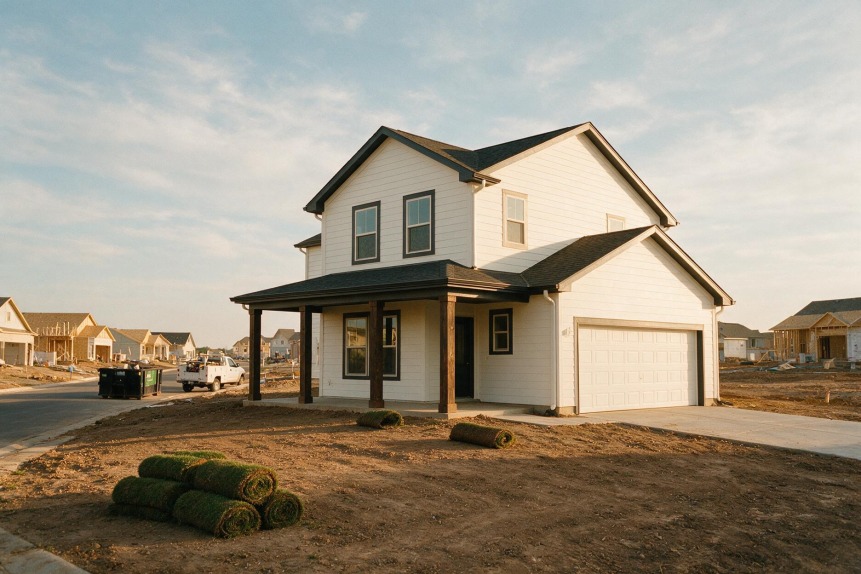
This is not just homes on a drawing board. Calculated Risk’s Bill McBride, working from the same Census tables, counted 117,000 completed new homes for sale in July, nearly four times the 31,000 record low in February 2022. Another 256,000 were still under construction.
A finished spec house has land, construction capital, taxes, and carrying costs sitting in it every day it does not close. That is why builders have been competing on more than curb appeal. HousingWire described a “race to the bottom” in some markets, with price cuts, mortgage-rate buydowns, and other incentives used to turn lookers into contracts.
The NAHB/Wells Fargo Housing Market Index ticked up one point to 35 in August, still well below the 50 line that separates “good” from “poor.” NAHB chief economist Robert Dietz said August was the 16th straight month that at least 30% of builders cut prices to support demand. In the latest survey, 35% of builders reduced prices, by an average of 6%. Sales incentives were in use at 63% of builders, unchanged from July.
The median price of a new house sold in July was $393,800, the lowest since July 2021. Mix is doing a lot of that work. Builders have been putting up smaller, lower-priced homes because more households can qualify for them. HousingWire notes the national median is more than 14% below its 2022 peak, with product mix explaining much of the drop.
Resales are still a tighter market
Existing homes have not followed the new-home script. Redfin, for the four weeks ending Aug. 23, put active listings at about 1.50 million and months of supply at 3.8, still below the 4-to-5-month band most analysts treat as balanced. Pending sales fell to a six-month low. About 20.8% of listings carried a price cut, and the average sale-to-list ratio was 98.8%.
The country is running two housing markets at once. New construction is oversupplied at today’s sales pace. Resales are slower, but they are not sitting on 9.6 months of stock. Local maps still matter more than the national average. Redfin called much of Miami, Nashville, and Texas a buyer’s market. Custom builders, Dietz said, are still outperforming spec builders.
Compare the payment, not just the list price
If you are shopping, put a new spec home and a nearby resale on the same worksheet. Ask the builder to put the buydown, closing-cost credit, or price cut in writing, and check how long that package is actually offered. Builder margins are under pressure, so incentives that look generous in August may be thinner later.
If you are listing a resale next to new construction, do not price off what a neighbor got a year ago. Buyers can walk down the street and get a rate buydown the used house cannot match unless you concede something similar.
None of this is a 2008 rerun. New-home sales are still far above housing-bust lows. It is a split market: more standing inventory on the new-home side, tighter shelves on the resale side, and a monthly payment that is doing more of the negotiating than the headline rate.