Guide
Buying a House That Needs Repairs: Conventional, HomeStyle and FHA 203(k)
Short answer
Yes, often. A conventional loan can be used on a house that needs repairs as long as the appraiser rates its condition C5 or better. A C6 home, one with damage that affects safety, soundness or structural integrity, must be repaired to at least C5 before Fannie Mae will buy the loan, so lenders normally require the work first. If you want the repair money in the loan, a Fannie Mae HomeStyle Renovation or FHA 203(k) loan is built for that.
Published by Chris Lamm, NMLS 209221Published Sources checked
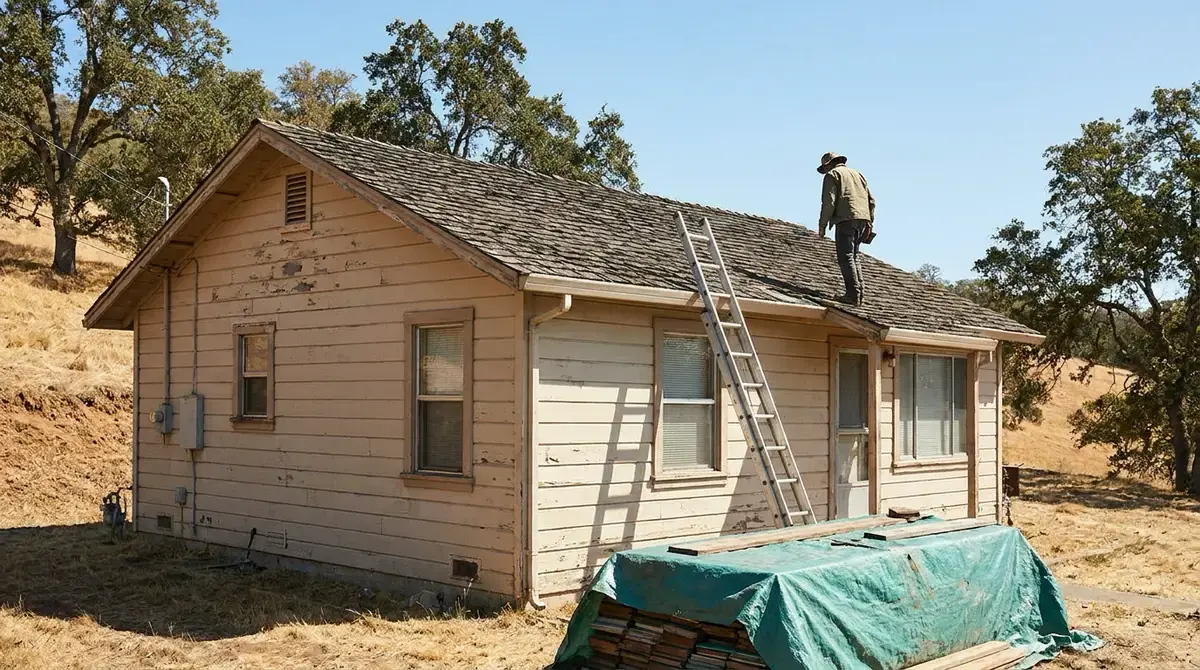
Can you buy a house that needs work with a conventional loan?
The answer turns on the appraiser's condition rating. Fannie Mae's Selling Guide says homes rated C1 through C5 are eligible in as-is condition. A home rated C6 has substantial damage or deferred maintenance that affects safety, soundness or structural integrity, and it is not eligible as-is. The appraisal is then made subject to repairs, and the work has to bring the home to at least C5.
In practice, cosmetic issues, dated kitchens, worn carpet and old paint rarely stop a conventional loan. Deficiencies severe enough to affect safety, soundness or structural integrity usually do.
As-is vs subject to repairs
When an appraisal is made subject to repairs, Fannie Mae requires the home to reach at least C5 before it buys the loan, so most lenders require proof the work is done before closing. That proof is usually a completion report on Fannie Mae Form 1004D from the appraiser. Fannie Mae allows postponed improvements after closing only in limited cases, such as new construction or HomeStyle Refresh, and then the work must be finished within 180 days of the note date.
So for a standard conventional purchase, required repairs are usually handled by the seller before closing, or the deal moves to a renovation loan that is designed to fund work after closing.
Fannie Mae HomeStyle Renovation
HomeStyle lets the purchase or refinance include the cost of repairs and improvements in one conventional loan. Renovation costs on a purchase can be up to 75% of the lesser of the purchase price plus renovation costs or the as-completed appraised value. On a refinance the cap is 75% of the as-completed value, and on a manufactured home it is 50%, with no structural changes.
Work must be finished within 15 months of closing; a limited extension to 18 months requires Fannie Mae approval and written documentation. On one-unit homes, other than manufactured homes, the lender may approve do-it-yourself work of up to 10% of the as-completed value, and contractors must be licensed where the law requires it. Eligible properties include one-to-four unit primary residences, one-unit second homes and one-unit investment properties, which is one reason HomeStyle can fit where FHA cannot.
Freddie Mac CHOICERenovation
Freddie Mac's version works the same way at a high level. On a purchase, renovation costs are capped at 75% of the lesser of the purchase price plus renovation costs or the as-completed value; on a no-cash-out refinance, 75% of the as-completed value; on a manufactured home, the lesser of $50,000 or 50% of the as-completed value. Work must be completed within 450 days of the note date. A smaller CHOICEReno eXPress option, for lighter projects, must be completed within 180 days.
FHA 203(k): Limited vs Standard
FHA's renovation loan comes in two versions. The Limited 203(k) finances up to $75,000 in total rehabilitation costs for minor remodeling and nonstructural repairs, and eligible energy improvements can be added on top of that limit; a consultant is optional, and the work must be finished within nine months. HUD's comparison sheet lists items such as roofing and well or septic work as eligible.
The Standard 203(k) is for larger or structural projects. The repair cost must be at least $5,000, a HUD 203(k) consultant is required, the work must be completed within 12 months, and when the home is uninhabitable during the work, the lender may set up a reserve of up to 12 months of mortgage payments. FHA's limits and minimum property requirements, that the home be safe, sound and secure when finished, still apply.
Repair loan options compared
| Option | Repair budget | Completion window | Notes |
|---|---|---|---|
| Standard conventional | None in the loan | Before closing if required | C1 to C5 eligible as-is; C6 must be repaired |
| Fannie Mae HomeStyle | Purchase: up to 75% of the lesser of price plus renovation or as-completed value | 15 months; up to 18 with Fannie Mae approval | Primary, second home or investment |
| Freddie Mac CHOICERenovation | Purchase: up to 75% of the lesser of price plus renovation or as-completed value | 450 days (eXPress: 180) | eXPress version for smaller jobs |
| FHA Limited 203(k) | Up to $75,000 nonstructural, plus eligible energy improvements | Nine months | Consultant optional |
| FHA Standard 203(k) | At least $5,000, structural allowed | 12 months | Consultant required |
Repair loans in Redding and Shasta County
Older Redding homes can need roof, HVAC or electrical work, and those items can come up in inspections. Outside city services, well and septic condition matter too, and those can be financed in a Limited 203(k). Contractor availability and bids drive renovation timelines, so get the bid early and make sure the contractor is willing to work with a renovation loan's draw process.
If the work is small and cosmetic, a standard conventional or FHA loan with the home as-is is often simpler. If the repair list includes safety or structural items, a renovation loan or seller repairs before closing are the realistic options. Our earlier article on financing a home that needs a new roof and our renovation loan guide go deeper.
How to choose
Start with the inspection and a rough repair budget. Then sort the list into safety or structural items, which drive the appraisal, and wants. Match the total to the program: cosmetic only, a standard loan; nonstructural work within the $75,000 Limited 203(k) cap (plus any eligible energy improvements) on a primary residence, a Limited 203(k) or HomeStyle; structural work or a larger nonstructural budget, a Standard 203(k) or HomeStyle; a one-unit second home or investment property, HomeStyle.
Start here: Renovation loan game plan
A few short questions, then your contact details. Your answers start a review; they are not an application or a lending decision.
What would you like to do?
Sources
Program rules and figures on this page come from these primary sources, each checked on the date shown. Rules change; we confirm them again for your file.
- Fannie Mae Selling Guide B4-1.3-06, Property Condition and Quality of Construction, checked
- Fannie Mae Selling Guide B4-1.2-05, Requirements for Verifying Completion and Postponed Improvements, checked
- Fannie Mae Selling Guide B5-3.2, HomeStyle Renovation Mortgages, checked
- Freddie Mac Guide Chapter 4607, CHOICERenovation and CHOICEReno eXPress, checked
- HUD: 203(k) Rehabilitation Mortgage Insurance, checked
- HUD Mortgagee Letter 2024-13 (203(k) updates), checked
General education, not a loan offer or a commitment to lend. Eligibility, terms and costs depend on your full application and the program rules in effect when you apply.
Rates and terms subject to change without notice. Not a commitment to lend. Not available in all states. This is not tax, legal, or financial advice. Consult a qualified professional for your specific situation.
Common questions
Can I get a conventional loan on a house that needs repairs?
Yes, when the appraiser rates the home C5 or better. A C6 home, with damage affecting safety, soundness or structure, has to be brought to at least C5, which lenders normally require before closing, or financed with a renovation loan.
Who pays for repairs the appraiser requires?
That is negotiated in the purchase contract. Often the seller completes the work before closing; otherwise a renovation loan can fund it after closing.
What is the difference between HomeStyle and a 203(k)?
HomeStyle is a conventional Fannie Mae loan that can also be used for second homes and investment properties. A 203(k) is FHA, for primary residences, with a Limited version up to $75,000 in rehabilitation costs (eligible energy improvements can be added) and a Standard version for larger or structural work.
How much can a Limited 203(k) cover?
HUD allows up to $75,000 in total rehabilitation costs for nonstructural repairs and improvements, completed within nine months. Eligible energy improvements can be financed in addition to that limit.
Can I do the work myself?
On one-unit homes other than manufactured homes, HomeStyle lets the lender approve do-it-yourself work up to 10% of the as-completed value, and sweat equity does not count. For a 203(k), the lender reviews the contractor and the bid, so plan on using a contractor.
Does a renovation loan take longer to close?
Plan for extra time, because the contractor bid, plans and as-completed appraisal have to be reviewed before closing. Getting bids early helps.